Why Climate Action Matters in My Community

Growing up in Eastern Uganda, I observed how deeply people’s lives are tied to land, weather patterns, and natural resources. In many rural areas, agriculture remains the backbone of household income and food security. However, this dependence is increasingly challenged by environmental and socio-economic pressures that continue to intensify over time.
The legacy of past conflict in parts of Northern Uganda left communities struggling to rebuild their livelihoods. In the process of recovery, pressure on natural resources increased significantly as people sought energy, land for settlement, and survival opportunities. This contributed to gradual changes in land cover and natural vegetation, with long-term implications for ecological balance.
Over the years, seasonal patterns have become less predictable. Communities now experience longer dry spells, inconsistent rainfall, and more intense weather variations. These shifts have reduced the reliability of farming cycles, making it harder for small holder farmers to plan planting and harvesting activities with confidence.
In addition to climate variability, environmental degradation has become more visible in many landscapes. Soil fertility is declining in some areas due to continuous cultivation and reduced natural regeneration. Water sources are also under increasing pressure, affecting both household consumption and livestock production systems.
These environmental changes are closely linked to human health and wellbeing. In many rural settings, changes in climate conditions have contributed to fluctuations in disease patterns, affecting both humans and animals. This has added new layers of vulnerability to already resource-constrained communities.
From a livestock and agricultural systems perspective, unsustainable grazing practices and increasing land pressure have in some cases contributed to land degradation. This affects pasture availability, soil structure, and overall productivity of farming systems, further reinforcing cycles of low yield and economic stress.
My academic and professional exposure has helped me understand these challenges not as isolated problems, but as interconnected systems. Environmental change, agricultural productivity, and rural livelihoods are deeply linked, and any meaningful solution must address them together.
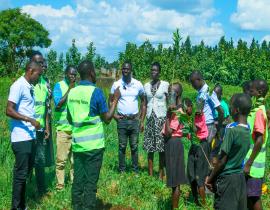
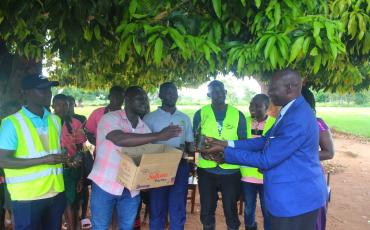
Through ongoing field engagement and community-based initiatives such as tree restoration activities in Paicho, Gulu District, I have seen firsthand that local action plays a critical role in restoring degraded landscapes and building awareness around sustainable land use. These efforts demonstrate that even small interventions, when consistently applied, can contribute to long-term ecological recovery.
One of the major barriers in many communities remains limited access to practical environmental knowledge. Many people are not fully aware of how everyday activities such as land clearing, burning, or overuse of natural resources contribute to long-term environmental change. This highlights the importance of continuous education and local engagement in promoting more sustainable practices.
At the core, climate action in my community is about protecting the systems that sustain life; soil, water, vegetation, and biodiversity. Strengthening these systems is essential for ensuring long-term food security, improving resilience, and safeguarding the wellbeing of future generations.